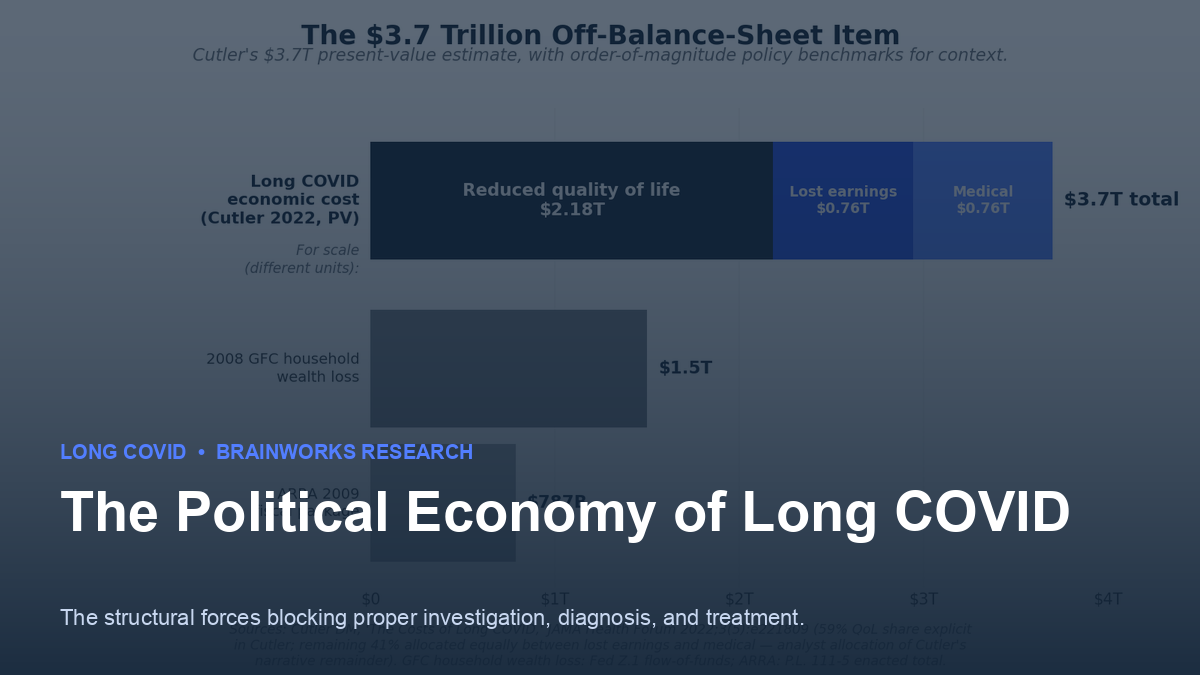
Quantifying the workforce, fiscal, and health-system cost of post-acute COVID — and the policy levers that bend the curve.
This executive summary is available to all readers. Subscribe to access the full report, interactive exhibits, and AI analyst.
Long COVID is not just a clinical problem — it is a multi-trillion-dollar drag on labor markets, disability systems, healthcare budgets, and long-run productivity. This report quantifies the economic footprint of post-acute COVID across workforce participation, lost output, disability claims, healthcare utilization, and intergenerational human-capital effects.
It then maps the political-economy stakeholders — payers, employers, insurers, disability programs, federal research agencies — and identifies the policy levers (research funding, disability adjudication standards, employer accommodation rules, therapeutic reimbursement) that most directly change the cost trajectory.
The analysis pairs the mechanistic atlas with extraction-economy methods previously applied to U.S. healthcare to expose where the costs land and who bears them. Open the full report on Fleet for the line-item cost decomposition, stakeholder map, and recommended policy package.
Workforce, fiscal, and health-system cost decomposition — annualized burden and 10-year projections.
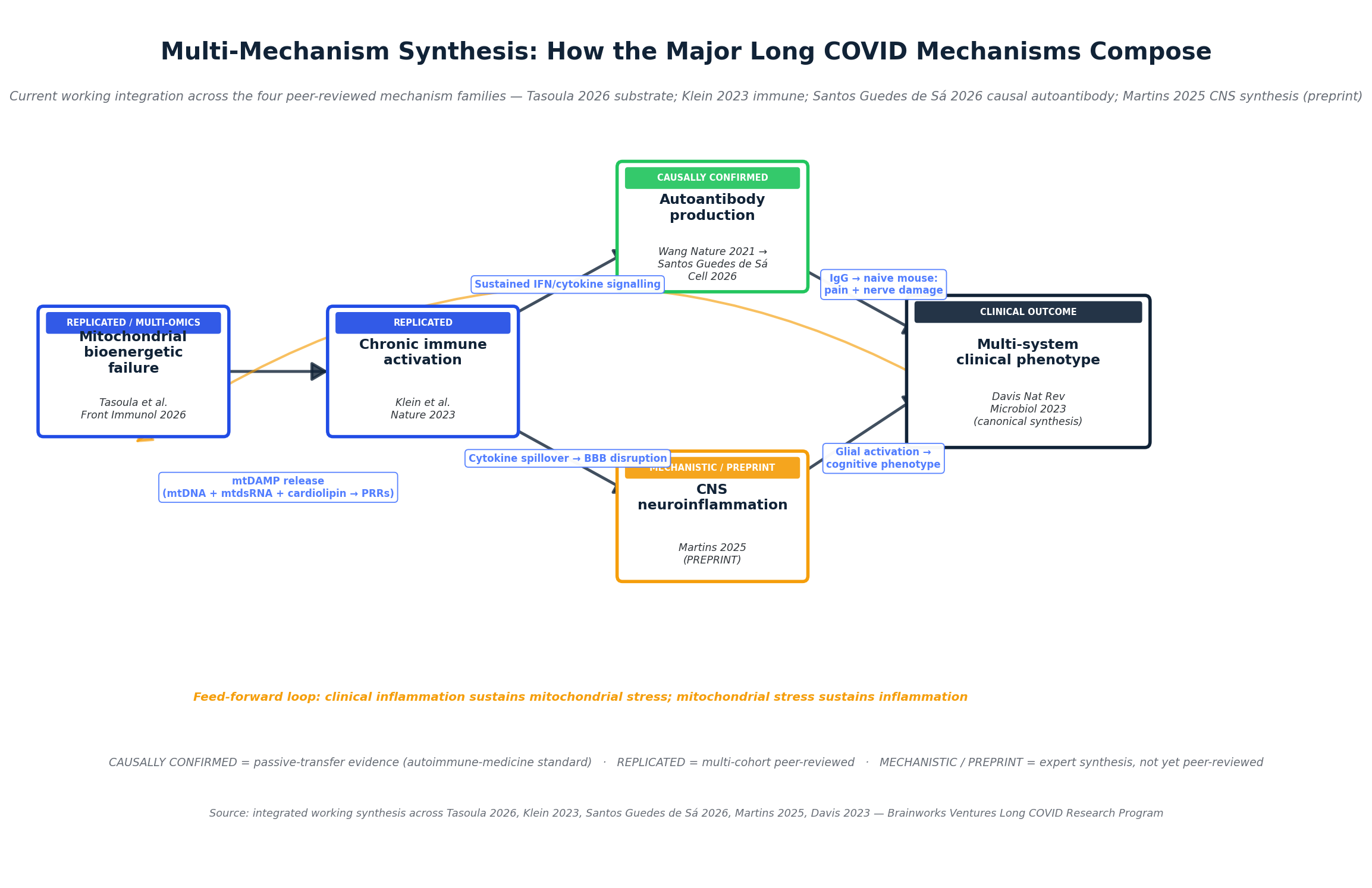
5,101 papers → 13 chains → ESTABLISHED-tier mechanisms — the mechanistic backbone the cost model rides on.
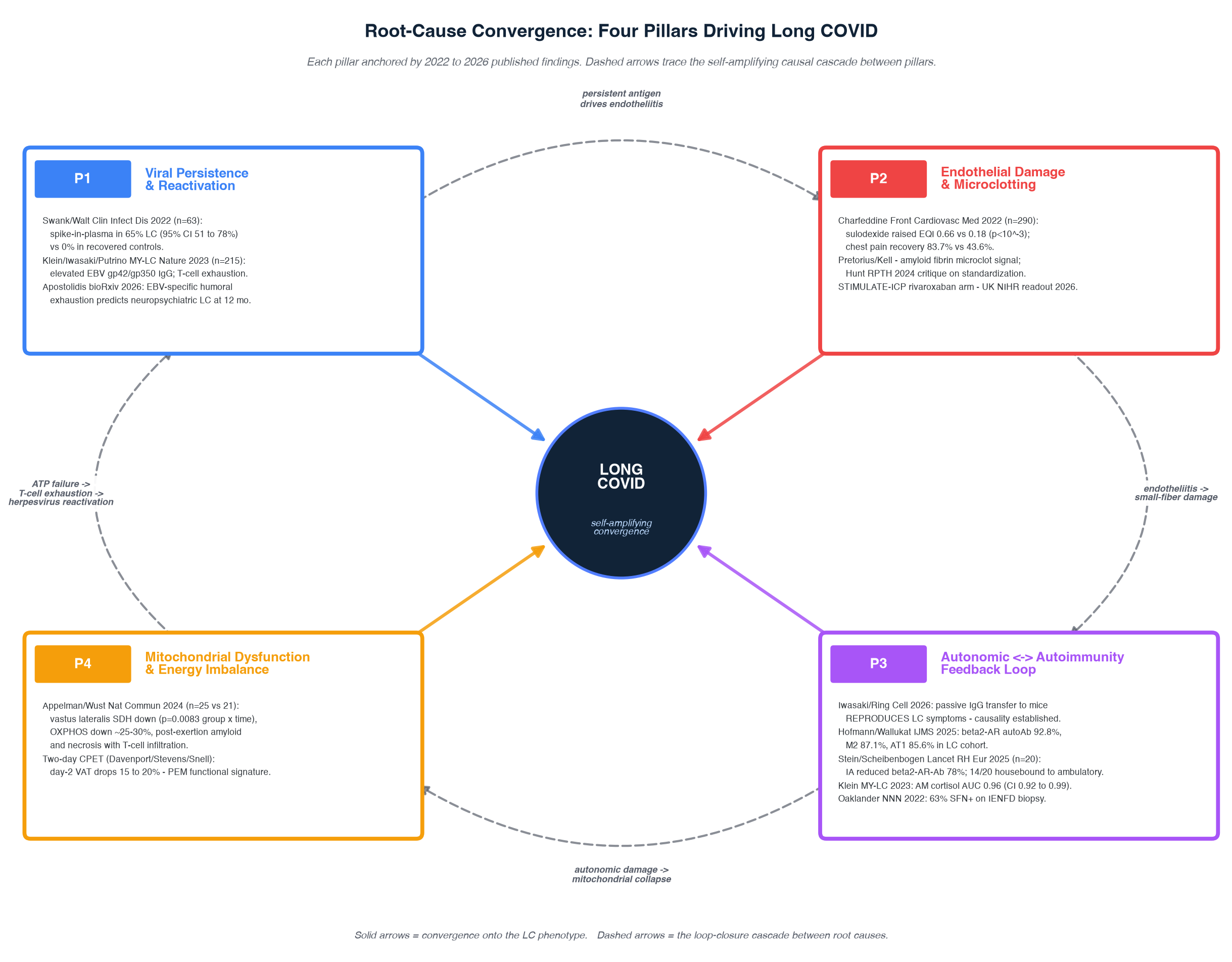
Where research funding, disability adjudication, and reimbursement policy most efficiently bend the cost curve.
Get unlimited access to all 7 chapters, 10 interactive exhibits, and AI analyst conversations.
Or access the current version at fleet.brainworks.ai
Converse with the AI analyst who built this research. Challenge assumptions, explore scenarios, and get personalized insights.
The Political Economy of Long COVID
Get instant, citation-backed insights about this report. Ask anything about the methodology, data, or findings.
You have 3 of 3 free queries remaining
The Political Economy of Long COVID
Get instant, citation-backed insights about this report. Ask anything about the methodology, data, or findings.
You have 3 of 3 free queries remaining